
 Nöbetçi Eczaneler




In a survey conducted by easyJet with 10,000 international passengers, the most preferred seat turned out to be 7F, the window seat. In the same survey, 59% of passengers said they prefer to sit by the window, but seat preferences also varied between nationalities. For instance, 80% of Portuguese passengers preferred the window, while 48% of Germans opted for aisle seats.
As someone who has flown for many years as an aviation reporter, I personally prefer the aisle. Why? Because I like to stretch part of my shoulder or one foot into the aisle, of course, only when it doesn’t interfere with cabin crew operations.
But there is one seat on a narrow-body aircraft that could make me say, “Would I fly in this again? Only if I check in the moment it opens!”
So what seat could possibly intimidate an aviation journalist who has spent years in the industry? On which seat, and which flight, could I have such an unpleasant experience? For me, there is no difference between business and economy. With my experience in aviation and especially inside an aircraft, every seat feels like business.
Now, back to the KLM story:
In 2019, Dutch flag carrier KLM held an event at Amsterdam Schiphol Airport to celebrate its 100th anniversary. I had completed all my preparations to fly to Schiphol on behalf of the organization I worked for at the time.
As KLM prepared to mark its 100th year on October 7, 2019, the airline kicked off a 100-day countdown and emphasized its vision for a sustainable future in aviation. Through its “Fly Responsibly” initiative, KLM called on all industry stakeholders to join forces for a greener future.
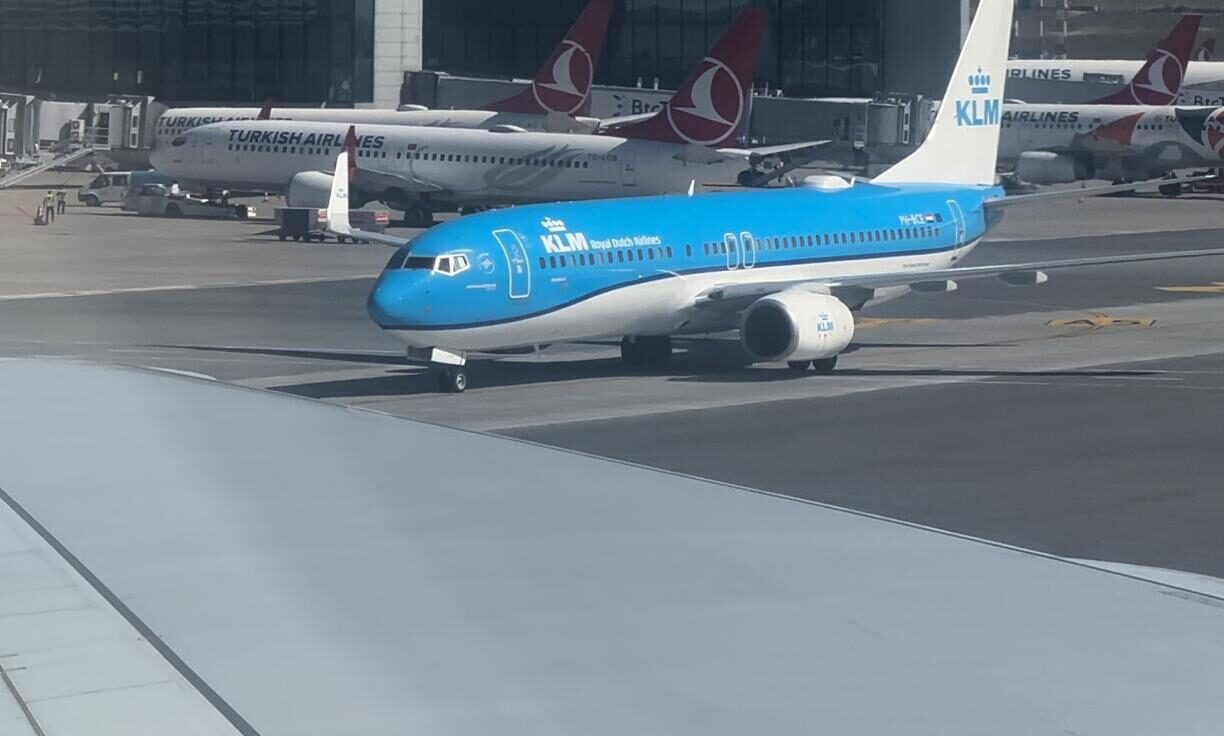
We were scheduled to fly on KLM’s narrow-body aircraft from Istanbul Airport (IGA). But because I had a very tight travel schedule at the time, I didn’t check in and made it to the flight at the very last minute.
I ended up sitting in the very last row, in the middle seat. And it wouldn’t be wrong to say that this is the most uncomfortable seat on any aircraft, typically chosen by the most inexperienced travelers.
So, what are the negative consequences of flying in this seat?
The seat doesn’t recline
Take Airbus, for example, the A350 and A380 wide-body jets have reclining seats across the entire cabin. But on narrow-body aircraft like the Airbus A320/A321 or Boeing 737s, the last row does not recline. You sit upright during takeoff, landing, and basically the entire flight. If you’re exhausted and want to sleep, you must accept doing so without reclining. On longer flights, expect stiffness, neck pain, or back aches.
The sound of the toilet flush
Narrow-body aircraft typically have two lavatories, one at the front and one at the back. Aircraft toilets operate on a vacuum system designed to ensure maximum cleanliness with minimal water. The moment you press the button, it sucks everything in at around 160 km/h. With that kind of suction, expecting silence would be unrealistic. Sitting in the last row means you hear it more frequently and more loudly. Considering that on a 300-seat aircraft, around 250 economy passengers use the restroom, this can significantly degrade your comfort.
Chatty cabin crew
Cabin crew coordinate safety, meal service, and communication with the front of the aircraft through constant dialogue. To avoid walking the full length of the aircraft unnecessarily, the crew in the back often uses the interphone. Over time, a mix of face-to-face conversations and phone calls can feel like you’re seated next to someone who never stops talking.
The bathroom queue
On narrow-body aircraft, around 20 business-class passengers use the front lavatory, while roughly 200 economy passengers use the one at the back. I won’t get into microbiology, but the numbers speak for themselves. And if you are seated in the very last row of economy, things get tougher. The queue forms right in front of you. Sometimes you find yourself wondering, “Are they doing a dance line back here?” With turbulence, people may bump into you, step on you, speak loudly, or block your space, a never-ending sequence of comfort-breaking moments.
Why isn’t there a stairway at the rear door?
After surviving all that, your flight finally ends and the aircraft docks at the gate. Naturally, you’ll deplane 10–15 minutes after the first passenger. Because you’re seated at the very back, you’re the last one to leave. You’ll be at the very end of the passport control line. Other passengers will collect their overhead bags, reorganize their belongings, and only after the entire aircraft clears out will you get your chance to stand up and get moving.