
 Nöbetçi Eczaneler



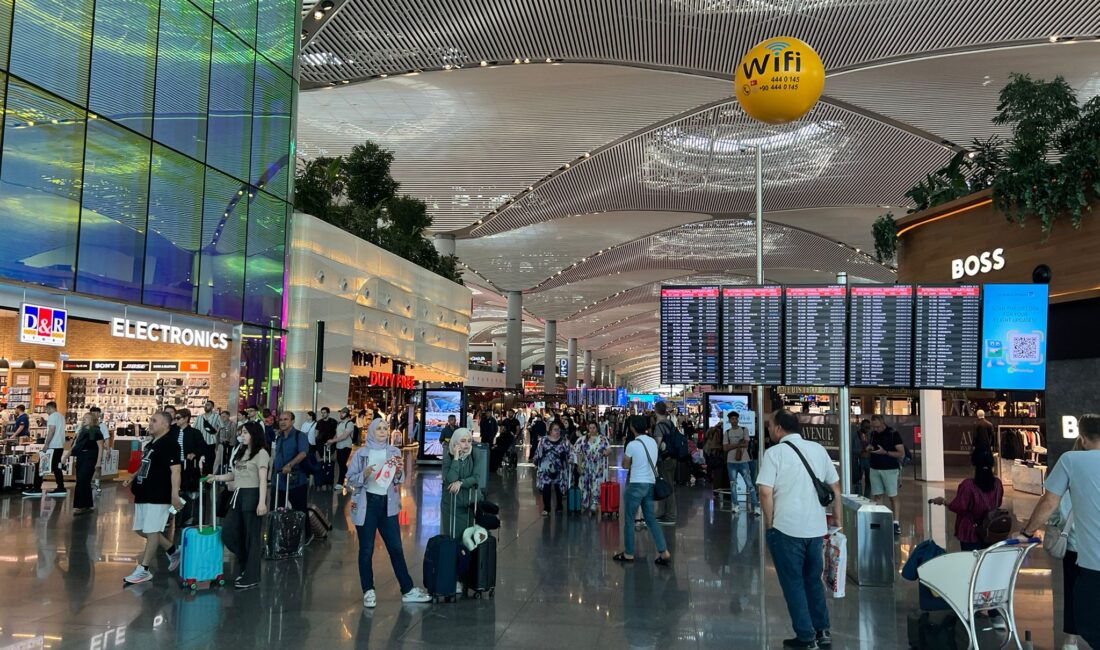
In recent years, one reality has become increasingly clear in the aviation world:
The fate of an airport is no longer determined only on the runway, but within the commercial square meters inside the terminal.
So, how are these spaces leased?
Which brands secure a place inside the terminal?
And why do commercial areas now play a strategic role in the economic DNA of airports?
Let’s take a closer look at the hidden economy beyond the runway.
The Backbone of Leasing: A Competitive Tender Culture
Leasing at airports is far more sophisticated than traditional real estate leasing, because:
-
Space is limited
-
Passenger flows are carefully calculated
-
Security, operations, and standardization are mandatory
-
Every brand directly impacts the terminal’s image
For these reasons, airport leasing is most commonly managed through competitive tender processes.
1) Open Tender (RFP): The Industry Standard
Used by more than 80% of airports worldwide.
Brands are evaluated based on:
-
Financial offers
-
Concept strength
-
Operational capability
-
Brand reputation
Winning a space in a major terminal is, in many ways, like qualifying for the “Champions League” of the aviation industry.
2) Invitation-Only Tenders: The Luxury Game
Some premium locations are open only to selected brands.
Names such as Dior, Cartier, and Bottega Veneta are invited directly because of the value they add to the terminal’s identity.
3) Direct Negotiation: Reserved for Large-Scale Operations
Used for complex, high-investment operations such as duty-free.
Also preferred when time constraints exist, particularly in newly opened terminals.
The Mathematics of Airport Leasing Models
The global standard for airport commercial leasing is:
Minimum Guarantee + Revenue Share
In this model, the tenant:
-
Pays a fixed annual minimum guarantee
-
Shares a percentage of its turnover with the airport operator
In duty-free operations, this revenue share can reach 30–50%.
The “whichever is higher” principle protects the airport operator while giving concessionaires a performance-based reality or insurance against loss.
Post-Pandemic Leasing Trends:
-
Rent indexed to passenger volume
-
Hybrid and flexible revenue-sharing models
-
Gradual rent adjustments during crisis periods
Today, airport leasing is being redefined globally through the concept of risk sharing.
Brand Selection: Not Just a Store, but a Showcase
Opening a store at an airport means positioning a brand on an international stage.
Selection criteria are therefore multi-layered:
-
Global brand strength
-
Operational experience
-
Compliance with airport discipline
-
Fit with the passenger profile
-
Contribution to the local, global balance
Well-managed airports today position Starbucks alongside third-wave local coffee brands, and Louis Vuitton next to local artisans, because modern airports have become cultural showcases of their cities.
Location: The Most Valuable Square Meters in the Terminal
Choosing the right location can be just as critical as choosing the right brand.
-
Post-security first-contact zones
-
Walk-through routes within the duty-free
-
Gate-front areas with long dwell times
These are the golden zones of the terminal.
Studies show that every additional 10 minutes a passenger spends in the terminal increases retail spending by 5–8%.
That’s why many modern airports design passenger flows that deliberately pass through retail zones.
Highest-Revenue Commercial Categories
1) Duty-Free
Cosmetics, alcohol, tobacco, and chocolate
Still the largest revenue generator for airports
2) Food & Beverage
Coffee chains, quick-service restaurants, and premium dining
The fastest-recovering category post-pandemic
3) Luxury Retail
Watches, jewelry, handbags, fashion
The highest profit per square meter
4) Convenience & Market Products
Essential for last-minute passenger purchases
5) Vending & Digital Solutions
A rapidly growing next-generation retail model
Global Commercial Performance Leaders
Dubai International (DXB)
Achieved a record $2.16 billion in duty-free sales in 2023, reinforcing its global leadership through strong perfume, alcohol, and gold categories.
London Heathrow (LHR)
Home to Europe’s largest luxury airport retail ecosystem. Retail revenues reached £698 million in 2023, making LHR a European benchmark with brands such as Chanel, Louis Vuitton, and Gucci.
Singapore Changi (SIN)
One of the world’s most successful examples of an experience + commerce model. Concession revenues reached S$2.2 billion in 2024, driven by Jewel and its themed terminal structure.
Doha Hamad (HIA)
One of the fastest-growing airports worldwide in terms of spend per passenger. Qatar Duty Free increased revenues by 32% in 2023, while spend per passenger rose by 49%.
Istanbul Airport (IST)
Retail sales exceeded €1 billion in 2023. Home to Heinemann’s highest-performing global location, IST has rapidly joined the top global league with its Luxury Square and extensive duty-free areas.
Final Thought
Today, leasing commercial space at an airport is a multi-disciplinary expertise, where architecture, retail, psychology, data analytics, and aviation operations intersect.
When the right brand, the right location, and the right leasing model come together, just a few square meters inside a terminal can generate millions of dollars in revenue.
And the new reality of the airport economy delivers a clear message:
The runway may move aircraft, but retail moves the balance sheet.