
 Nöbetçi Eczaneler



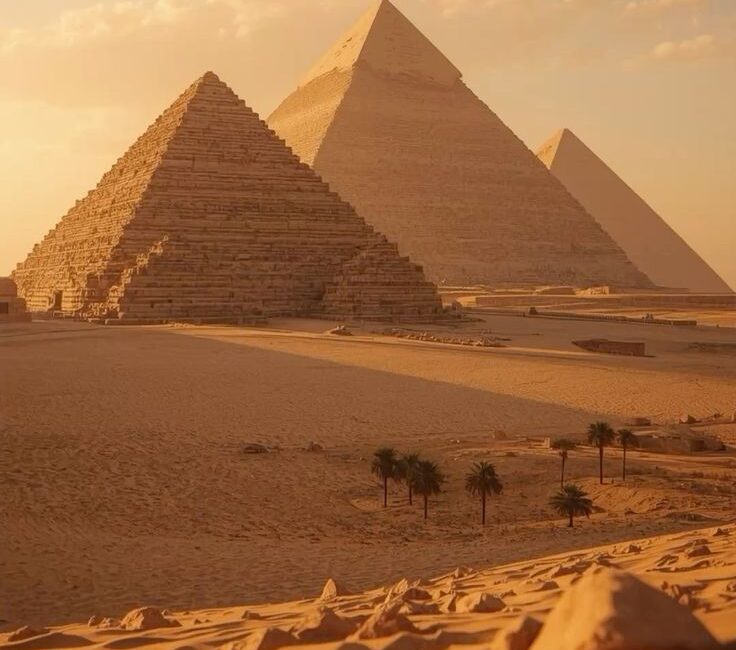
How about embarking on a journey to the Arab Republic of Egypt, officially known as the Arab Republic of Egypt, located at the crossroads of Africa and Asia?
As a licensed English- and Arabic-speaking tourist guide with 28 years of experience under Türkiye’s Ministry of Tourism, Egypt is one of the countries I have visited most frequently. I was even referred to as “Miss Egypt” at one point and was awarded a plaque by then-President Hosni Mubarak in recognition of my contributions to the country. Perhaps one day, we may even travel to Egypt together.
Egypt is one of the world’s oldest settlements, with a history dating back to 5000 BC. Acting as a bridge between Africa and Asia and a maritime gateway connecting Europe, India, and the Far East, Egypt’s strategic location has made it home to numerous civilisations throughout history. From the Pharaohs and ancient Egyptian gods to Byzantines, Romans, Mamluks, Ottomans, and Napoleonic France, Egypt carries the marks of countless cultures. With nearly 7,000 years of history, it is one of humanity’s earliest and most influential civilizations in art and science. Ottoman rule in Egypt began during the reign of Sultan Selim I and lasted 285 years.
Egypt is the world’s 15th most populous country, with approximately 100 million people and a surface area of 1,002,450 km².
While the majority of the population is Muslim, the proportion of Christian Egyptians has been increasing steadily. When I first visited in 1992 while studying Arabic Language and Literature, Christians represented about 4% of the population; today, the figure is closer to 20%. Friday is the weekly holiday for Muslims, while Saturday and Sunday are holidays for Christians.
Endless deserts alongside vast oases; the Nile River and the Red Sea; luxury and poverty; luxury cars pulling up to world-class hotels alongside horse-drawn carriages; lavish yachts next to small lifeboats; contrasts exist side by side. Despite these extremes, the people are warm, smiling, and genuinely happy.
The word “Mısır” comes from the Arabic “Misr,” meaning great city, metropolis, or capital. “Egypt” dates back to pre-Islamic times; the Ancient Greeks called the land “Aigyptos,” which evolved into “Egypt.” Arabic words consist of three consonants without vowels. “Misr” is formed by the letters Mim (M), Sad (S), and Ra (R). Each letter symbolises a period in Egypt’s history:
-
M (Mim) stands for hardship,
-
S (Sad) represents patience,
-
R (Ra) signifies prosperity.
Thus, “Misr” means Hardship – Patience – Prosperity.
Water is humanity’s most fundamental need. Historically, civilisations settled near water sources. Although 95% of Egypt’s land consists of desert, the remaining 5%, along the Nile River from south to north, hosts settlements and greenery, as the Nile is the country’s primary lifeline.
Along the Nile’s irrigation canals, lotus flowers and bamboo grow; in the eastern deserts that receive rainfall, tamarisk, acacia, thorny shrubs, succulents, and aromatic herbs are found, along with ironwood used for timber. Phoenician juniper trees grow in the north, while various palm species thrive in the oases.
The Nile River is the second-longest river in the world at 6,853 km, and its basin covers one-tenth of Africa. It flows through nine countries: Egypt, Sudan, Burundi, Rwanda, Congo, Tanzania, Kenya, Uganda, and Ethiopia. The longest stretch—1,500 km—runs through Egypt.
The river originates in Burundi in the East African Great Lakes region as the Kagera River. Flowing from south to north, this direction led ancient Egyptians to divide the country into Upper Egypt and Lower Egypt. The Nile has three main tributaries: the White Nile, the Blue Nile, and the Atbara River.
The Kagera River forms the border between Tanzania, Uganda, and Rwanda before flowing into Lake Victoria. From there, it enters Sudan and merges with the Blue Nile near Khartoum. The Blue Nile originates in central Ethiopia. The Atbara River enters Egypt near the Aswan Dam and flows north, forming the Nile Delta near Cairo before emptying into the Mediterranean Sea at Alexandria and Damietta.
The Pyramids of Egypt
When Egypt is mentioned, the pyramids, one of the Seven Wonders of the Ancient World, immediately come to mind. Nearly 150 pyramids have been discovered to date. For ancient Egyptians who believed in life after death, pyramids were built to ensure that pharaohs and royal family members could unite with the sun god Ra.
Although pyramids exist elsewhere in the world, they are most concentrated in Egypt’s Giza region. Key pyramids include:
-
Great Pyramid of Khufu (Cheops)
-
Step Pyramid of Saqqara
-
Pyramid of Khafre
-
Bent Pyramid of Dahshur
-
Pyramid of Pepi II
-
Meidum Pyramid of Sneferu
-
Pyramid of Menkaure
Outside Egypt, notable pyramids are found in Mexico (Teotihuacan, Uxmal), China (Dohan Temple), and Bolivia (Tiahuanaco).
The Giza complex consists of the pyramids of Khufu, Khafre, and Menkaure. The Great Pyramid of Khufu took 20 years to build, stands 150 meters tall, and consists of 2.3 million limestone blocks weighing 2.5 tons each, with a total weight of 5.5 million tons.
Numerous fascinating claims exist about the pyramids, including their astronomical alignments, climatic balance, and geometric precision, many of which continue to intrigue scientists and historians today.
The Sphinx
The Sphinx is a statue with the body of a lion and the head of a ram, bird, or human. First appearing in Ancient Egypt, it later became significant in Greek mythology. The most famous is the Great Sphinx of Giza, located opposite the Pyramid of Khafre. It is the world’s largest monolithic stone structure and represents human intelligence combined with the strength of a lion.
Valley of the Kings
Located in Luxor, this valley contains tombs carved into pyramid-shaped mountains for pharaohs and nobles, including those of Tutankhamun, Tiye, Merneptah, and Tausret.
Egyptian Museum (Cairo)
In 1835, Muhammad Ali Pasha banned the trade of antiquities and preserved them in a building in the Ezbekiye Garden. Opened in 1902, it is the Middle East’s oldest museum, housing 150,000 artefacts spanning 7,000 years, including statues, coffins, royal belongings, and the mummies of Ramses II and other pharaohs.
Major Destinations
-
Sharm El Sheikh – One of the world’s best diving destinations.
-
Hurghada – A Red Sea favourite with beaches and dive sites.
-
Aswan – Known for its dry healing climate, the Aswan Dam, and historic sites.
-
Luxor – The world’s greatest open-air museum.
-
Alexandria – Founded by Alexander the Great; home to legendary landmarks.
-
Marsa Alam – A diving paradise and charming fishing town.
-
Abu Simbel – Monumental temples of Ramses II aligned with the sun on specific dates.
Egyptian Cuisine
Egyptian cuisine reflects Ottoman, Lebanese, Palestinian, and Syrian influences. Popular dishes include molokhia, ful medames, falafel, koshari, shawarma, kebabs, stuffed pigeon, and desserts like Umm Ali. Mint tea and cardamom coffee are widely enjoyed.
What to Do in Egypt
From exploring the pyramids, cruising the Nile, visiting ancient temples, diving in the Red Sea, bargaining in bazaars, to tasting street food, Egypt offers endless experiences.
Practical Information
Egypt’s economy relies on the Suez Canal, agriculture, fishing, industry, and tourism. Popular souvenirs include papyrus, spices, perfumes, galabiyas, and onyx statues.
Visa requirements, cultural etiquette, climate advice, nightlife, public holidays, festivals, emergency numbers, and travel tips are essential to know before visiting.
When to Go
The best time to visit Egypt is between October and April. Summers are extremely hot for cultural tours, though Red Sea resorts are suitable year-round.
If you would like to travel to Egypt with me, you can contact me via Instagram: @omurkahramann