 Nöbetçi Eczaneler




İrem Fıratoğlu is a Turkish aerospace engineer who has achieved remarkable success at a young age. With her forward-looking perspective, determination, and commitment to supporting women in aviation, her story offers a roadmap for young women aspiring to build a career in this challenging yet rewarding field.
Could you tell us a bit about yourself? Where did you grow up, and how did your upbringing shape you?
I was born in Ankara on September 12, 1991, and grew up there. My father was a bureaucrat, and my mother a teacher. From my father, I learned to serve society, to lead, and to stay true to my culture; from my mother, I learned the value of education, effort, and patience. I completed primary and secondary education at TED Ankara College and graduated from university in Eskişehir.
In 2018, I began my aviation career as an Audit Engineer at the Directorate General of Civil Aviation in Türkiye. During this time, I prepared for the Jean Monnet Scholarship Program and earned the opportunity to pursue a master’s degree at the French Civil Aviation University (École Nationale de l’Aviation Civile). After an internship at Eurocontrol in Brussels, I received a job offer in 2022 and relocated to Toulouse. Currently, I work at Airbus Protect, focusing on long-term operational concept changes and certification processes.
What drew you to aviation?
Actually, my journey in aviation started by coincidence. I saw a job posting from the Directorate General of Civil Aviation and applied. However, from the first day I started working, aviation became a true passion for me. Having worked across multiple departments, I’ve seen that aviation constantly renews itself, leverages cutting-edge technology, and most importantly, connects people and cultures across the world.
Have you ever had a moment when you felt, ‘I’ve succeeded’?
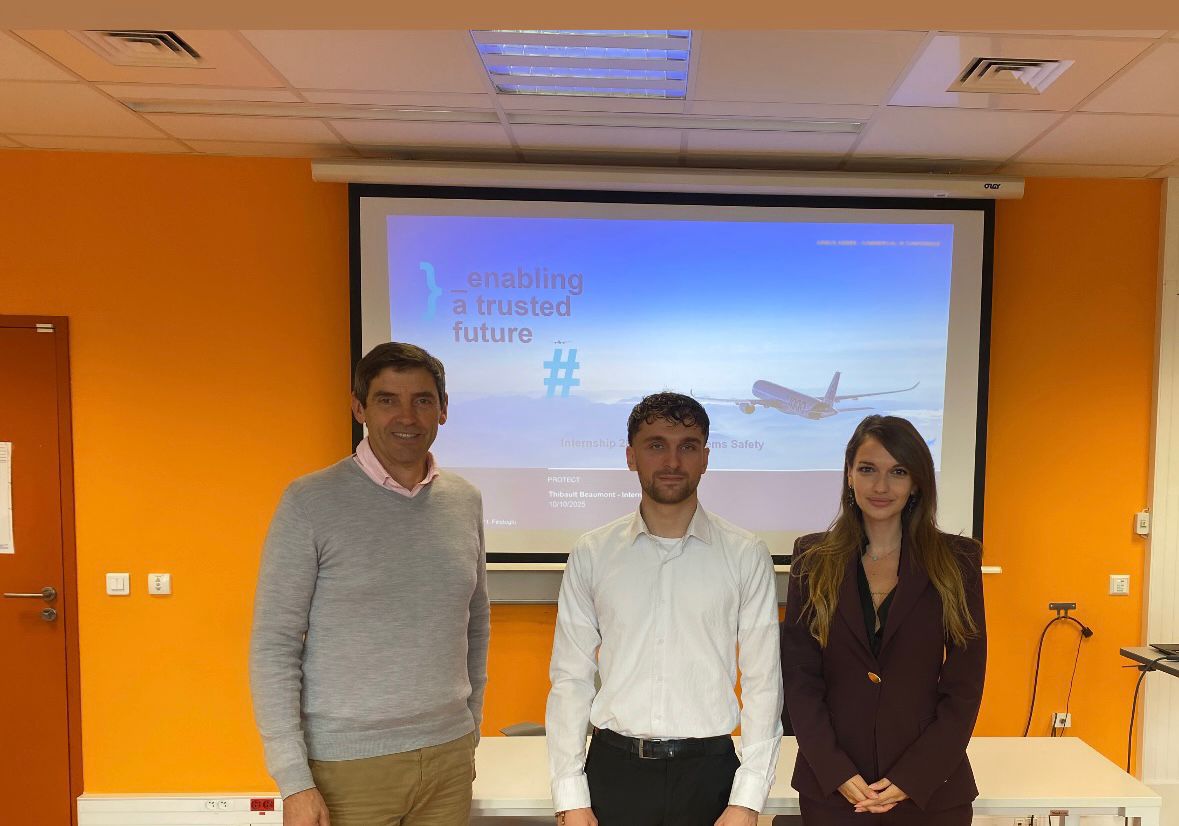
Leaving a stable government position in Türkiye and moving to France to join the private sector was a bold decision. But it paid off: just a year and a half after joining Airbus, I was honored with the AIRward and promoted soon after. That recognition motivated me to keep giving back, so each year, I make it a personal mission to mentor at least one intern.
Despite my busy schedule, spending time with interns and guiding them through their journey brings me immense joy. Being by their side during graduation defenses and sharing their excitement are the moments that make me feel “I’ve succeeded.” For me, touching lives and contributing to others’ growth gives life its deepest meaning.

What advice would you give to young professionals, especially women, shaping their career paths?
Based on my experience, I believe everyone should live abroad at least once, or take steps toward it. Experiencing different cultures and pushing our boundaries are invaluable for both personal and professional growth.
My journey began thanks to the Jean Monnet Scholarship, which opened the door to Europe. With the job offer that followed, I’ve now been living in Toulouse for about four years. This experience has profoundly transformed me, both professionally and personally.
Learning a new language and adapting to a new culture can be challenging, but it’s one of the most powerful ways to discover yourself. That’s why I advise new graduates to explore programs like Jean Monnet, Chevening, Fulbright, or France’s GIFAS and Eiffel Excellence scholarships. Take initiative and apply; these programs won’t just advance your career; they’ll change the way you see the world. As Rumi said, “Once you start walking, the road appears.”
What advice would you give to women balancing career and personal life in such a demanding sector?
Balancing career and personal life is a universal challenge. However, for women, being financially and emotionally independent is particularly important for building healthy relationships and strong lives.
I believe we need to question the extra burdens society often places on women. Achieving balance requires solid foundations and setting the right priorities at different stages of life. In a dynamic field like aviation, time management is crucial, but so is never giving up on education, creation, and growth.
At the same time, taking moments to rest, spending time in nature, and nurturing positive relationships all help in making healthier decisions and maintaining long-term balance.
Is there a female leader who inspires you?
There are two. First, Sabiha Gökçen, the world’s first female combat pilot. What inspires me most about her story is a detail many overlook: at age 12, she courageously approached Mustafa Kemal Atatürk during his visit to Bursa and spoke to him. That act of courage changed her destiny.
The second is Güliz Öztürk, CEO of Pegasus Airlines. I deeply admire her leadership, especially at a time when the number of female CEOs globally is still low. Her philosophy, “There’s no such thing as a man’s job or a woman’s job,” and her efforts to put this belief into real-world practice through initiatives like Women in Sales Network truly inspire me.
What changes would you like to see in aviation in the future?
Aviation faces ambitious goals, achieving net-zero carbon emissions by 2050, expanding the use of sustainable aviation fuels, and managing the doubling of air traffic capacity within the next 20 years. This transformation will require innovative airspace management, efficient aircraft production, and strong collaboration across the sector.
At the heart of this change lies digitalization and artificial intelligence. As highlighted in the EASA AI Roadmap, AI’s purpose is not to replace humans but to support human decision-making, enhancing both safety and efficiency. I believe AI won’t eliminate jobs but make them smarter, and we shouldn’t fear that.
Finally, I truly hope to see more women employed and leading in aviation. A more inclusive future is only possible together.