
 Nöbetçi Eczaneler



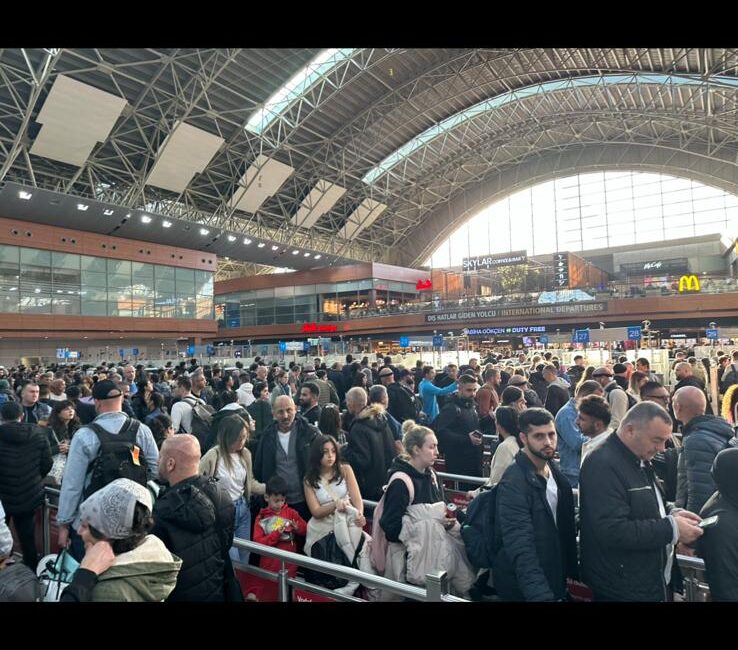
For airports worldwide, 2025 marked a strong post-pandemic recovery year. Global hubs not only returned to pre-2019 levels but, in many cases, surpassed them. While geopolitical tensions such as the Israel–Iran situation and continued airspace closures over Ukraine created periodic disruptions, overall airport operations remained far more stable than in previous years. In 2024, European airports faced capacity challenges driven by the UEFA European Championship and the Paris Olympic Games, leading to airspace inefficiencies and congestion caused by private jet traffic. In 2025, however, the industry delivered a far more balanced operational performance.
In this context, leading aviation data and analytics provider OAG (Official Aviation Guide) released its ranking of the world’s busiest airports for 2025.
Atlanta Hartsfield-Jackson Retains Global Leadership
After briefly losing its long-held top position in 2020 due to the pandemic, Atlanta Hartsfield-Jackson reclaimed its leadership in 2023 and has now remained the world’s busiest airport through 2025. With 63.1 million seats, Atlanta ranked first globally. Capacity increased by 1% compared to 2024 and came very close to its 2019 pre-pandemic level.
Dubai’s Upward Momentum Continues
Dubai International Airport followed closely with 62.4 million seats, ranking second. Since 2019, Dubai’s seat capacity has grown by 16%, reflecting its rapid expansion. If no major disruptions impact global aviation next year, Dubai is expected to challenge Atlanta for the top position.
Istanbul Airport: 22% Growth vs. 2019
Tokyo Haneda ranked third with 55.4 million seats, maintaining stable year-on-year performance and slightly exceeding its 2019 levels.
The most notable long-term capacity growth, however, came from Istanbul Airport and Chicago O’Hare.
-
Chicago O’Hare increased capacity by 8% year-on-year, returning to its 2019 level.
-
Istanbul Airport recorded a 6% annual increase and a remarkable 22% growth compared to 2019, rising from 16th place in 2019 to the 5th busiest airport globally in 2025.
New Entrants to the Global Top 10 Since 2019
Compared to the 2019 rankings, four airports entered the global top 10 in 2025:
-
Istanbul Airport: from 16th → 5th
-
Dallas Fort Worth: from 13th → 6th
-
Guangzhou Baiyun: from 12th → 9th
-
Denver International: from 21st → 10th
World’s Top 10 Busiest Airports in 2025 (Seat Capacity)
-
Atlanta Hartsfield-Jackson – 63.09M
-
Dubai International – 62.43M
-
Tokyo Haneda – 55.36M
-
London Heathrow – 52.11M
-
Istanbul Airport – 51.51M
-
Dallas Fort Worth – 51.24M
-
Shanghai Pudong – 51.07M
-
Chicago O’Hare – 50.58M
-
Guangzhou Baiyun – 50.18M
-
Denver International – 49.49M
Europe’s Busiest Airports: Istanbul Strengthens Its Position
London Heathrow remained Europe’s busiest airport with 52.11 million seats, followed closely by Istanbul Airport with 51.51 million seats, which posted a strong 6% annual growth. Notably, Istanbul recorded the largest long-term capacity increase among Europe’s top 10 airports, now standing more than 22% above its 2019 level.
Paris Charles de Gaulle ranked third in Europe with 43.22 million seats, continuing its recovery, though still slightly below pre-pandemic capacity.
Sabiha Gökçen: Fastest Long-Term Growth in Europe
Istanbul Sabiha Gökçen Airport recorded the highest annual growth rate among Europe’s top 10, expanding capacity by 15% in 2025 to reach 28.6 million seats. Compared to 2019, Sabiha Gökçen achieved a 37% capacity increase, reflecting its rapid rise as a major low-cost and regional hub.
Europe’s Top 10 Busiest Airports in 2025
-
London Heathrow – 52.11M
-
Istanbul Airport – 51.51M
-
Paris Charles de Gaulle – 43.22M
-
Amsterdam Schiphol – 41.34M
-
Frankfurt – 40.70M
-
Madrid Barajas – 38.57M
-
Barcelona – 33.29M
-
Rome Fiumicino – 31.01M
-
Istanbul Sabiha Gökçen – 28.60M
-
Munich – 28.08M