
 Nöbetçi Eczaneler


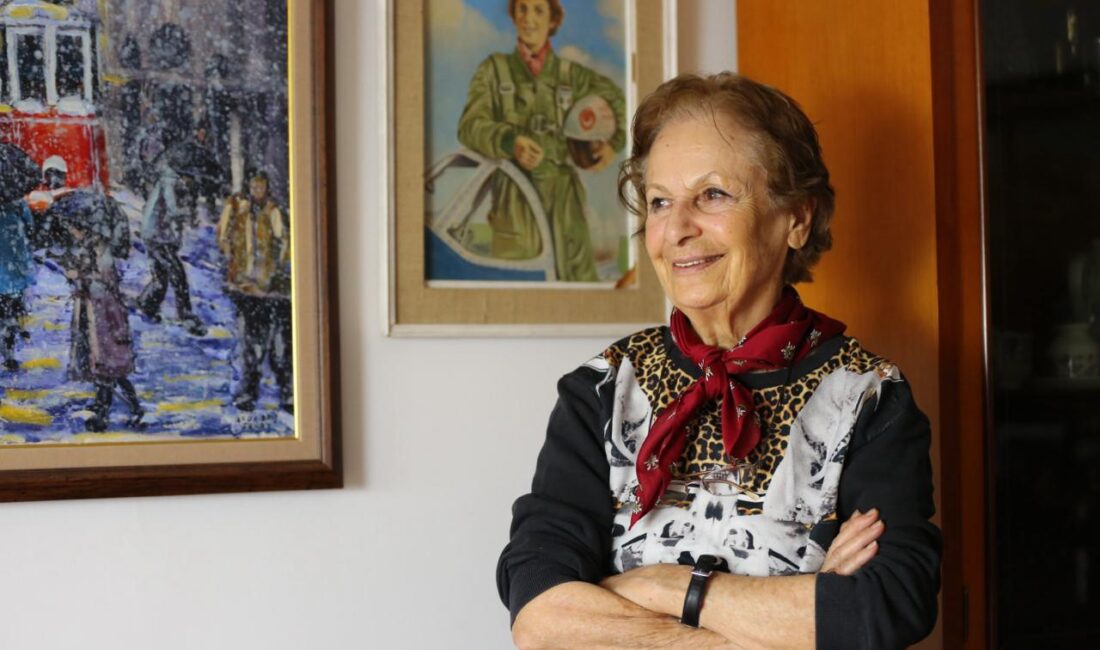
Many of the pioneering women pilots in Turkish aviation history completed their training in civilian schools. The process of Turkish women receiving professional military education by attending the Military Academy began with the first female cadet officer, İnci Arcan, in 1955.
How did your journey as a Military Academy student and later as a pilot begin?
I was born in 1938. My father was from Antakya, so I graduated from Antakya High School in 1954. Later, my family moved to Istanbul. We lived in Üsküdar. I enrolled in the Faculty of Law. The lecture hall had about 2,000 students, too crowded and uncomfortable. I didn’t like the environment. My father was very understanding; he was a veteran of the Gallipoli campaign. I left the law faculty and switched to English Philology. However, when our professors openly said, “If you are not from a school that publishes and programs in English, don’t stay here,” I left too.
At that time, there was no TV, but radios broadcast: “Attention! The doors of the Military Academies have been opened to Turkish young women!” Suddenly, I changed my plans. I told my father, “I want to go to the Air Force Academy.” The school was in Izmir. My father said, “No, my daughter cannot become a soldier.” It was a new thing; all families opposed it. But my mother and brothers convinced him, and my late father took me and enrolled me. That’s how I became a cadet.
At that time, the regulations for female students to be trained as active-duty officers stated: “Actions incompatible with the female constitution shall not be applied.”
Can you tell us about your initial training at the Military Academy?
Back then, the Military Academy was a two-year program. We started in 1956, with children raised from various families all over Turkey. The male cadets I met came from family backgrounds where women acted like slaves serving men. Together, we tried to build a new fate because this was a completely new field—girls were accepted into the army for the first time. Female cadets received the same armed training as the males, including shooting exercises. We were sent on marches for kilometers. A military GMC vehicle followed us, picking up those who fainted or whose feet gave out. I would endure everything. Because of this, my legs developed severe varicose veins, but I never complained.
Why? In such an environment, a male cadet might quit, but I endured everything so that they wouldn’t say, “Did you even put effort into this?”
We had a class sergeant named Buğra. One day, after a cheerful chat with friends, he pulled me aside and said, “You laugh too much; it can be misunderstood.” I decided to be more careful in my demeanor.
Another incident was about the Texas Air Base in the U.S. We had to take an English exam, and the two top scorers would get jet flight training. I was one of them. However, the commander told me, “But no one told me you’re a female cadet, so you rest outside, my daughter.” They sent a substitute instead of me. These were warning signs.
Sabiha Gökçen is our pioneer. This adventure that Atatürk desired, which started with her, continued with us. Six female cadets were admitted in 1955 and 1956 to the Air Force Academy. Only Leman Bozkurt from the 1955 class became a pilot. Among the 1956 entrants, only I became a pilot.
Afterward, your flight training started.
Can you tell us which planes you flew and your training stages?
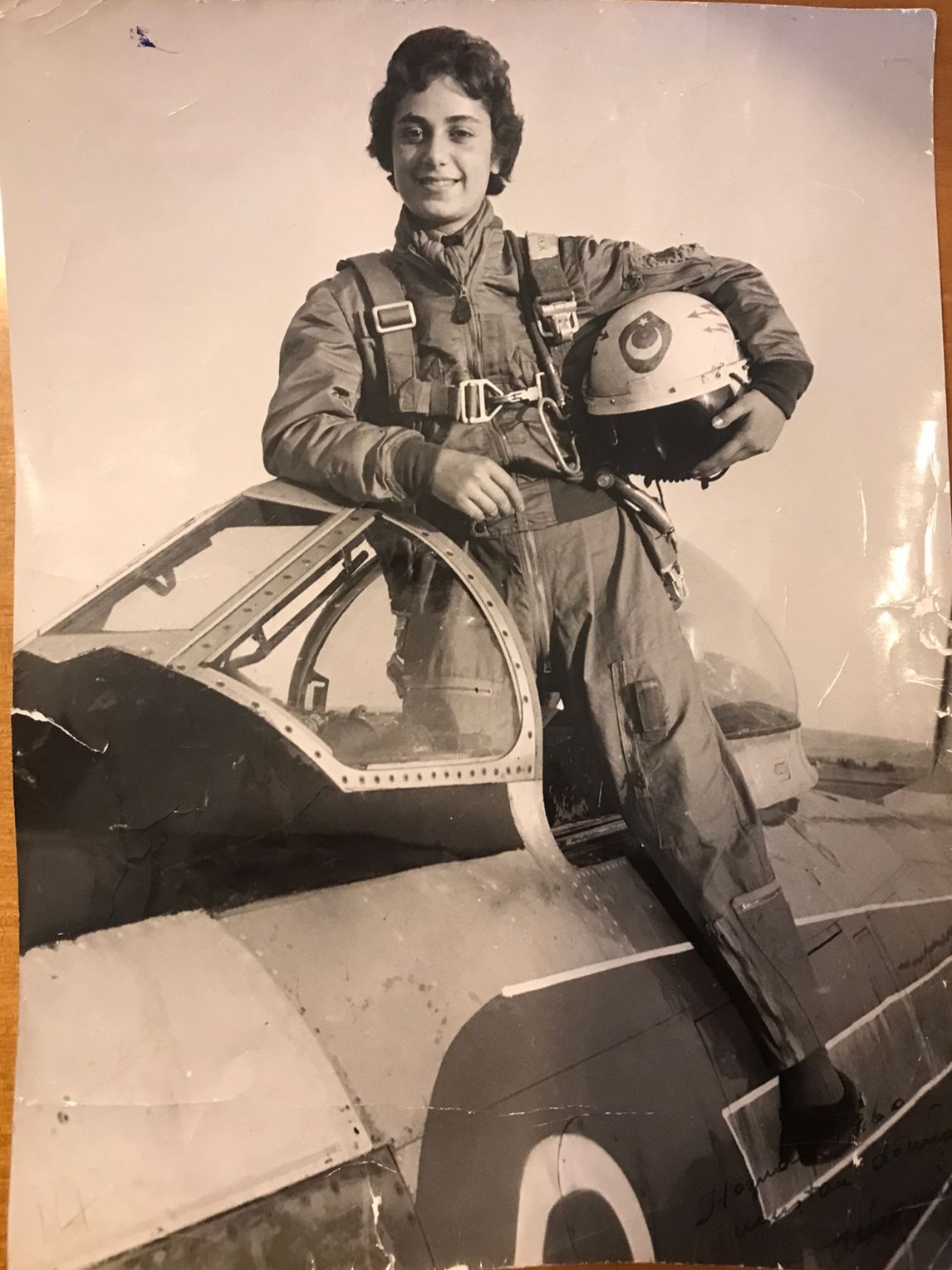
After graduating from the Air Force Academy, you are sent to the Air Hospital to get a fitness report. If you are fit, you start initial flight training in Gaziemir. The first plane I flew was the Magister. It was in a dusty shed. We started training according to the program on the training plane named “Uğur.” It was summer 1958. There were no Turkish planes; the planes came from American aid. I flew those planes. Each instructor had 3-4 pilot candidates. My first flight instructor was Hulki Özel, nicknamed “Genç.” He contributed greatly to my flight career. According to him, other instructors avoided teaching me and my friend Asimet, but the squadron commander selected Hulki as our instructor. No one expected us to succeed, but my instructor took initiative during my first solo flight. I took to the skies.
After proving myself on the Magister, I flew the T-6 Harvard, which was a more combat-capable plane. My T-6 instructor was Pilot Lieutenant Mehmet Ali Yılmaz. My first job was to memorize the plane’s features: altimeter for altitude, variometer for climb and descent, airspeed indicator, cylinder head temperature gauges… The most important task was to land the plane without damage, so we trained very hard. I even performed a solo “viril” maneuver with this plane. During flights, I was often mesmerized by the white travertines of Pamukkale and the greenery of Marmaris. We also did instrument flights with this plane, which is important for flying in very cloudy or fully covered weather, based on meteorological data.
The next stage was the Jet Training Squadron at the First Tactical Air Force Command in Eskişehir. I successfully passed the last exam before jets. Later, I learned from my instructor, Ali Özgüler, that some classmates tried to sabotage my flight. Fortunately, I succeeded.
I was very excited for jet training and began preparation in Eskişehir.
What was your first solo flight like? It must be the most exciting moment for a pilot candidate.
It was very exciting. Imagine the modest army of my country entrusting an aircraft to a 20-year-old young girl. For that reason, the first flight is about proving yourself and not disappointing those who believe in you. Everyone was watching: candidates, instructors, commanders, even journalists. For the first time, they were going to watch a female cadet’s flight.
I said, “Let me take a quick lap,” went to my plane, and did the external checks. I was in the cockpit. First, I got taxi permission, then runway entry clearance. I throttled the plane, and my excitement increased because I had flown only once before. Now, I was flying a Turkish Armed Forces aircraft solo. I felt as if I ruled all nature. Along with the feeling of loneliness, I began the descent. Finally, I landed my steel bird on the runway. I was very relieved and proud of proving myself.
An interesting dialogue occurred with journalists. American reporters wanted to photograph me on my friends’ shoulders, but I refused. My friend Asimet was also successful but could not graduate. It was a loss of a comrade for me.
You mentioned doing a “viril” solo. As far as I know, solo viril maneuvers are prohibited. This must have been a challenge for you. Can you explain the danger and the event?
I did the viril with the T-6. It was a challenge to my flight buddies. I had to prove myself once more. Viril is the last position a pilot wants to see before crashing. It’s abnormal, and if you don’t know how to recover, you crash.
One day, my instructor, Lieutenant Fahri Serener, said in front of my classmates, “Lieutenant Çiper! Today you will do two stump virils.” It was the first time anyone got permission for a solo viril in my class, so my friends were very surprised.
My dear friend Atilla Kolat, may his soul rest in peace, suddenly blocked my way. He didn’t believe I would do it alone. Nobody could question what happened on solo flights, so we never knew what was really going on. Atilla said, “No one will buy this, sis!” I told him to watch me by exchanging our plane numbers. He accepted. Our flight area was the mountains on the right side of the Tire-Bayındır plain; I would be on one side, he on the other. We took our places and gave each other a wing salute. I started the maneuver: first stump, success; second stump, success; and the third… My trusty plane did not fail me. That was my way of saying, “I did it!”
Can you tell us about your jet training?
It was the final stage of our flight training. We trained on T-33s. Initially, I found these planes strange, but once I started flying, I was very impressed by their elegance.
We were a group of 40, only Asimet and I were female cadets. My flight instructor was Affan Sedef. Our squadron commander was Major Tevfik Alpaslan. I was very successful in ground lessons. One day, my squadron commander congratulated me, and I was very proud. Years later, during my retirement, he sent me a letter expressing his pride in graduating a female jet pilot.
I especially enjoyed my first solo night flight on jets. During this heavenly experience, I first thanked God and then remembered Atatürk with gratitude.
Around that time, a group of German journalists came, took photos, and interviewed me. Their story was published in the Frankfurter Illustrierte magazine.
While all this was happening, soaring in the skies, the last thing you want to see is a friend not returning from a flight. You feel their absence when you receive your wings.
We had a friend from Kayseri named Tahir. We went on a planned solo flight. Everyone completed their missions and returned to the squadron one by one. But we received news of Tahir’s martyrdom. We mourned and sent him off with a ceremony.
Did you ever experience danger in the air?
Yes, of course. I recall once flying with my instructor when we heard a loud explosion from afar. The cover over the engine compartment flew off. We rapidly lost altitude. Thanks to my instructor’s quick reaction, we returned safely. This incident was something I had read about in crash reports: many pilots were lost due to compartment openings. It was even written on squadron walls.
Your jet training coincided with the 1960 coup. Also, female cadet admissions to the Air Force Academy stopped that year. What would you like to say about that process?
I had successfully completed jet training and was awaiting the ceremony to receive my wings. On May 27, we learned of the coup from radio broadcasts and were shocked. It was a difficult period. Regardless, I was proud of my wings. It was a great step to show what a Turkish woman could do. Just as everything was beginning, I realized a tough process was ahead.
We drew lots as usual. I was to be assigned to the 191st Squadron in Bandırma. I was happy to be close to my family. But the draw was canceled, and I was put on hold at the Gaziemir Air Training Command headquarters until further notice.
One day, I was summoned to the Parliament. I went and faced the National Unity Committee members Haydar Tunçkanat, Muzaffer Yurdakuler, and Mucip Ataklı. They treated me well but said, “We will no longer accept female students to the Military Academy. We leave you to yourself. Submit a resignation and leave. We do not want female officers in flight. Transfer to another branch, and we will compensate you.”
I was shocked and showed my wings, saying, “I have worked hard; I cannot do this.” They couldn’t separate me without convening a board, which they failed to do. But do you know what they did? They took me off jets and assigned me as a C-47 transport pilot.
You are also known as Turkey’s first female transport pilot. That story is interesting.
At that time, there were wide-bodied C-47 planes at the Etimesgut transport base. They exaggerated jets, but the plane they gave me… The jets next to it look like shiny butter. The plane was made in 1939 in the USA, used in WWII, Korea, and Vietnam. It was old and worn out when gifted to Turkey.
It was a bulky and heavy plane. I flew it for years. Its wide body caused severe turbulence issues for my small stature. No oxygen system, so you couldn’t fly high. If an engine stopped during turbulence, no autopilot. No hydraulic system or de-icers. Imagine a 1939 plane! I was left on one engine many times and faced many difficulties.
They thought I couldn’t handle it. That’s how my first continental assignment began, the 12th Transport Base 224th Squadron. The squadron commander was Major Nuri Gök, and they welcomed me warmly.
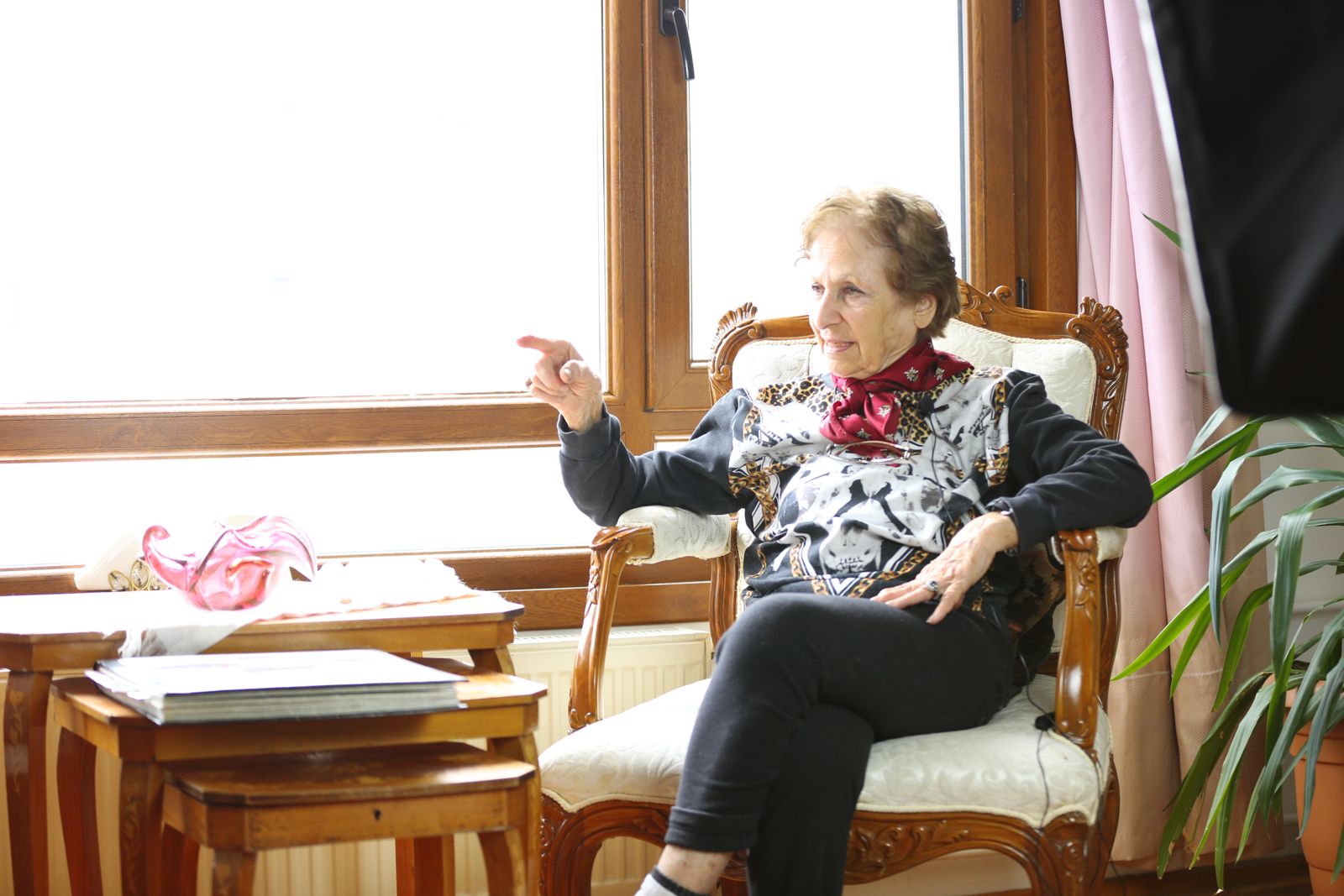
You also got married during this period. How did you meet Air Combat Lieutenant Celalettin Günay?
I had received many marriage proposals but had rejected them all. Someone new joined our chat group from a course in the U.S. His English was accented but good, and he was witty. We got engaged in April 1961 and married in October. We had three children: İrem, and twins Kerem, and Aslı. I couldn’t tell anyone about my pregnancies for a while because there were no regulations for women in the Turkish Armed Forces then. It became difficult as the children grew, especially during assignments in Naples and Germany.
Did your foreign colleagues admire you during your overseas assignments? Or did you feel that admiration?
In the 1970s, after attending a conference in London, we were walking around in formal attire. I was strolling down Oxford Street, England’s famous street. A sales clerk in one of the well-known British shops recognized me. Apparently, I had been shown on television the day before. Of course, I didn’t know. Regarding my colleagues, I have a memory of the first female cosmonaut, Tereshkova. The year 1975 was declared the Year of the Woman. The United Nations was organizing an event in Mexico City where women from various professions and countries represented their nations. A woman approached me and said she was Tereshkova, the Russian delegate. We started chatting. I expressed my admiration by saying, “If my country ever decides to send a woman to space, I would want to be that person.” She told me she greatly wished to be a female officer with a rank like mine. It was a very special conversation. Of course, there are opposite experiences as well. The wife of a foreign ambassador once said at a meeting that I was too feminine to be a pilot. I replied, “I wear the uniform and fly during the day; in the evening, I attend meetings with my husband.”
It is known that you retired voluntarily. Why did you make such a decision?
I can say this: as the first female pilot colonel, I fought against the windmills! In 1978, while I was on a headquarters duty in Ankara, suddenly, for reasons unknown, they transferred me and my husband to Eskişehir. That’s how the process began. I was going through a lot of hardship. I visited Sabiha Gökçen. She supported me by saying, “My dear Şenay, Atatürk was behind me, and I became Gökçen. Behind you is Allah.” At that time, Fahri Korutürk was president. For me, Sabiha Gökçen even went up to Korutürk on my behalf. Later, a colonel who was the personnel chief at the time heard our complaint. In other words, the button was pressed there. As you know, all pilots in the Air Force undergo flight tests, including a health test. You pass all clinical tests and continue flying. This is done once a year. Although I had received my flight fitness report three months earlier, I was ordered by a new letter to go for a health board exam again. Imagine, nine months early. If you don’t get the report, you can never fly again. I immediately went to Lieutenant General Cemil Çuha. He expressed his surprise. A military judge told me if I didn’t comply, I would be prosecuted for insubordination. There was an Air Hospital in Eskişehir; I went there. The chief physician, Vahyi Şenel, ran to me and said, “My girl, get out of here; they will take your pilot license away.” He was also the head of the flight board. I went to the board. It turned out everything was prearranged. Everyone had been instructed. The one behind this was the top commander, who did not want me to fly: Şahin Tepesi. In the military, the commander is everything. If you don’t comply, you suffer the consequences, from the lowest to the highest rank. At that time, we were staying at the Eskişehir Officers’ Club by the Porsuk River. I came back and told my husband we needed to return to Ankara. That’s how I submitted my retirement request. I had just become a colonel. I was not expecting anything else.
Recently, the Air Force Command published a booklet mentioning you as the “First Female Pilot Colonel.” Can you elaborate on this?
Leman was the first female jet pilot, but she left piloting when she was a captain. There was no female pilot with the rank of colonel during my era. I was the first woman to reach this rank as a pilot. I will ask for help from embassies; please research as well. I know about the U.S. and Russia. In 1975, at a NATO Senior Female Officers Meeting I attended in London, there was a commander of the Royal Air Force Women, but no female pilots. Look… The Air Force makes you a pilot, awards you your wings, and assigns you to the unit it wishes. It does not label you as a C-47 pilot, jet pilot, F-84, F-86, or F-16 pilot. You become a pilot in the Air Force. The Air Force is a branch of the Turkish Armed Forces. An officer trained there is an officer of the Turkish Armed Forces. I am the first female pilot colonel of the Turkish Armed Forces.
Finally, do you have a word for young cadets?
The cadet is my dear, my heart and soul. It is the cornerstone of the army. Take good care of the female cadets among you. They will be like mothers to you.
(Reporter: Orhan Köksal
Atlas History, Issue 92)