 Nöbetçi Eczaneler




Let’s start by getting to know you a bit. Can you tell us about your background, how you stepped into aviation, and your first experience flying in the cabin?
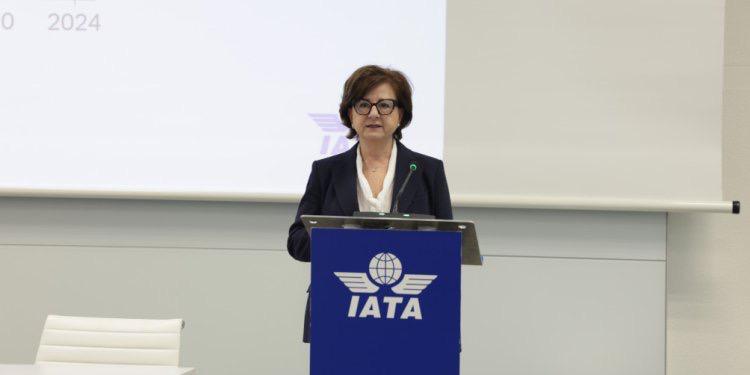
I was born in the US but grew up in Sweden. Most of my professional life was spent working as an economist in the banking sector. In 2022, I made the move into aviation by joining IATA, and I’m now based in Geneva, Switzerland. I have three boys, one lives in Sweden, and the other two are with me in Switzerland. As for my first time flying, it was probably back in 1966!
What is your most interesting memory in the aviation sector?
What I love about my job is that we can have a real impact and bring new and innovative solutions to our global industry, as we strive for both financial and environmental sustainability for airlines. This, in turn, is arguably the most growth-promoting policy on offer in today’s world, where global debt is near record highs and fiscal and monetary policies are stretched to the limit. In this sense, our work is uniquely meaningful, and every day is an interesting memory.
What would you like to see in the future of aviation?
In the whole history of mankind, it is notably energy and connectivity that have driven economic development. Think camels and fires in ancient times, to coal and steam engines, to fossil fuels and jet engines. Now we are in a transition, aiming to increase the use of renewable energy and reduce the use of fossil fuels. We have not yet figured out a new mode of propulsion for airplanes (hydrogen is in its infancy). But when the world has ample renewable energy, ample renewable fuel for airlines, and at some point, maybe a new form of propulsion, that will propel the global economy to new levels of prosperity, with better economic outcomes for all. This is the role that I see for aviation in the future.
Who is a female leader that inspires you?
As an economist, my mind goes to Elinor Ostrom, Esther Duflo, and Janet Yellen. As for world leaders, I would say Angela Merkel. And of course, Mother Teresa.
What is your most defining “leading lady” moment?
Don’t think I’ve had any of those.
What advice would you give to young women who are just starting their careers in aviation today?
I would give the same advice to anybody in any industry – focus on what you want to do, work a little bit harder than most, and good things will happen.
As SVP of Sustainability and Chief Economist at IATA, how do you see the aviation industry balancing economic growth with increasing sustainability demands, especially as global travel continues to rebound?
I definitely object to the idea that we should limit air transport in order to reduce CO2 emissions. The problem is the use of fossil fuels, upon which every industry is dependent. Clearly, we cannot curtail all industries to reduce the use of fossil fuels. Instead, we must work on producing more renewable energy for all and more renewable fuel for airlines. Economic development is about enabling, not about disabling. We must enable flying with minimal CO2 emissions, and this will accelerate productivity and economic growth across all industries that use air transportation services. Of course, with economies of scale in these forms of new energy production, the prices should fall and make it more affordable to airlines. This is a really important point because airlines’ net profit margin is a mere 3.7%, or USD 36 billion, so there is not much room for additional cost absorption.
Where do you think advanced air mobility (AAM) is headed, and what should today’s industry leaders do to stay resilient in the market?
I think that all forms of mobility are mutually supportive, on the whole, and I would strive for more, cheaper, and better mobility in all its forms for all.
Airlines are uniquely resilient, having bounced back rapidly after every major crisis, including COVID-19. However, given the low profit margins of the industry, airlines are not very robust. I wish airlines could build stronger balance sheets to be able to tackle challenges such as decarbonization with greater confidence and maybe afford some new strategies. Air transport is a very cyclical business, and it would be useful to seek areas of activity that could provide a reliable revenue stream over the business cycles. Insourcing the fuel supply could be one such strategy.
Marie’s latest contributions to the Swiss economic magazine AGEFI – in French
> Perturbations dans l’aviation, mieux comprendre comment le système fonctionne (January 2023)
> Le transport aérien se donne des ailes (December 2022)
> Les conséquences dangereuses de la forte appréciation du dollar (November 2022)