
 Nöbetçi Eczaneler



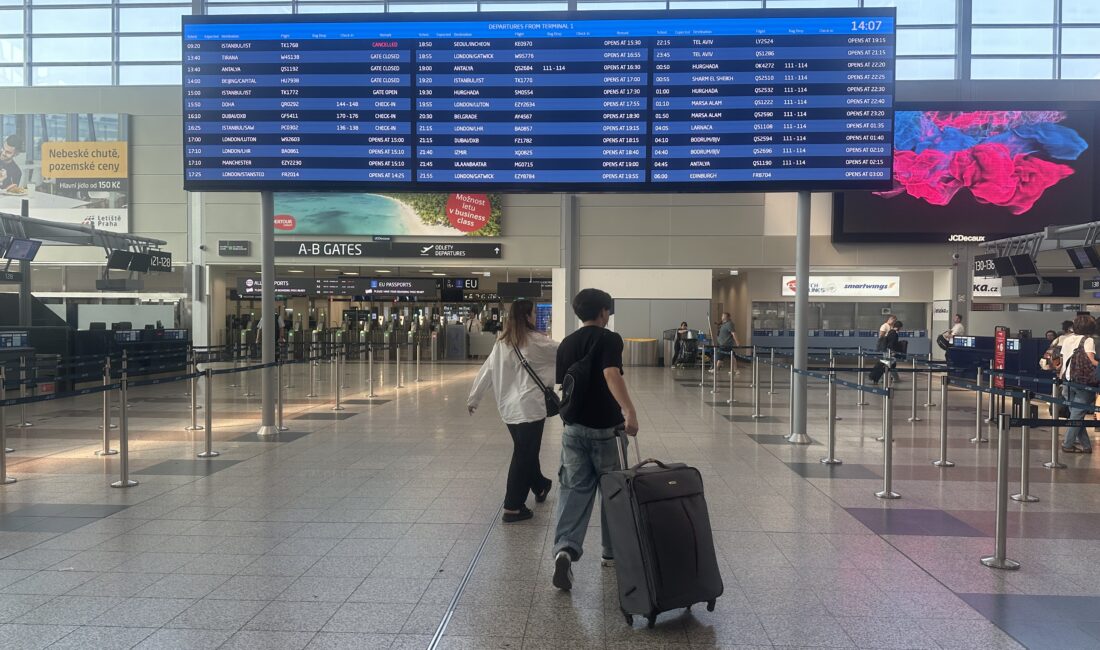
A passenger’s journey to the airport actually begins at home. Before even packing their bag, they complete online check-in via the mobile app, check flight times, reserve a parking spot, and place a duty-free order. What provides this comfort long before they step into the airport is a strong IT infrastructure, reliable internet connectivity, and seamlessly integrated systems.
Today, airports are no longer just runways and terminals; they are ecosystems woven together by a digital nervous system. Flight information displays, baggage management systems, biometric applications at passport control, customer recognition, and loyalty solutions are all parts of one whole.
One of the key building blocks of this whole is the Airport Collaborative Decision Making (A-CDM) approach. A-CDM enables shared data exchange between airlines, ground services, air traffic control, and airport operators. This allows real-time situation assessment, delay forecasting, optimized gate and bridge assignment, and balanced resource allocation. The result is time savings for passengers, sustainable efficiency for operations, and consistent, transparent flows for safety.
The integration of mobile applications takes the experience even further: passengers receive instant notifications about gate changes, track the status of their baggage, pre-order from duty-free stores, and navigate the terminal more easily.
“The flight information system is the passenger’s first compass.”
The departure and arrival times on terminal screens, the gate change on mobile apps, or the real-time flight updates are no coincidence. The flight information system merges airline, ATC, and terminal operation center data to guide every step of the passenger journey. This ensures both departing and arriving passengers have access to accurate information on time, reducing uncertainty.
“The resource planning system is the heart of the airport.”
Ensuring the aircraft arrives at the right gate at the right time, assigning the bridge, scheduling the baggage belt, and preparing buses and equipment on time is only possible through an integrated resource planning system. Gate and bridge allocation, parking stands, taxi times, and ground handling flow are coordinated under a single plan. With efficient use of resources, even peak hours run smoothly, avoiding a chain of delays.
“Biometric verification gives time back to passengers.”
Instead of long queues at passport control, biometric verification allows fast and secure passage. Facial recognition and fingerprint technologies accelerate the flow without compromising security. When combined with passenger recognition systems and loyalty programs, it enables personalized services, prioritization, and tailored offers.
“Arriving passengers are part of this story too.”
Integration is just as critical for arriving passenger flows. The aircraft docking at the correct bridge, baggage delivered quickly to the right belt, smooth coordination of customs and security systems, and information sharing with public transport and parking services ensure seamless connection with the city, all made possible through a unified data backbone.
“Loyalty programs and customer experience are the unseen side of revenue.”
When passengers feel valued, they spend more time in retail, food & beverage, and service areas. When loyalty programs integrate with flight and retail systems, personalized campaigns and offers are generated. This not only boosts satisfaction but also strengthens the balance of non-aviation revenue.
“Operational efficiency extends from the skies to the terminal.”
With real-time data shared between airlines, ground services, and airport operators, gate planning improves, turnaround times shorten, and the risk of delays decreases. Air traffic control and ground operations work from the same picture, enabling unified decision-making.
The Airport of the Future Lies in Integration
Integration is not a choice; it is a necessity. Without strong IT infrastructure and uninterrupted internet connectivity, there can be no trust, speed, or comfort. The true differentiator is data. With data analytics and AI support, information gathered from sensors, systems, and application flows is processed in real time. Congestion and risks are predicted, resource planning is dynamically updated, and gate/bridge assignments are instantly optimized.
Most importantly, airlines, ground services, airport operators, retail businesses, and air traffic control all view the right information at the same time and make the right decisions at the right moment. This boosts efficiency, enhances passenger satisfaction, and strengthens revenue balance.
An airport managed with integrated systems is not just a transit hub. It is a safe, fast, comfortable, and profitable experience center that exceeds passenger expectations and becomes the showcase of the city.