
 Nöbetçi Eczaneler



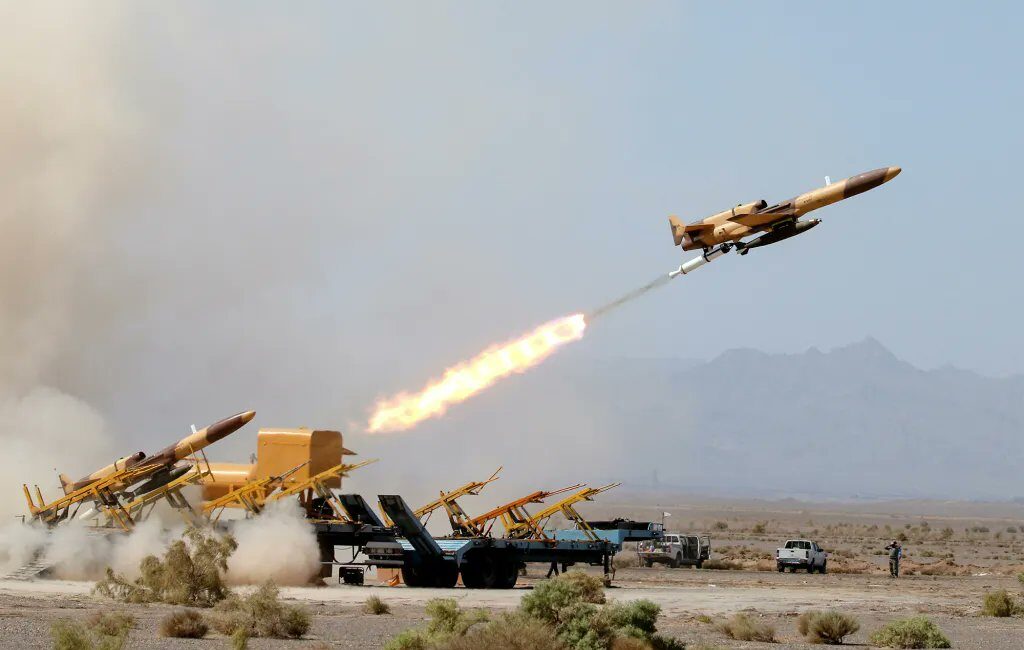
The chase that began a few days ago has evolved into one of the most complex cat-and-mouse games in modern warfare history. The ballistic missile launched by Iran toward Al Udeid Air Base in Qatar could not be intercepted by the Patriot Air Defense System. While this led some to label the air defense system as “ineffective,” the core issue lies in what is known as the “altitude gap.”
To understand this duel, we must first examine the design philosophies behind both systems.
Fattah-2
Unveiled in November 2023, Fattah-2 differs from its predecessor by employing a liquid-fueled Hypersonic Glide Vehicle (HGV). Unlike conventional ballistic missiles that exit the atmosphere and fall back under gravity, it glides through the upper layers of the atmosphere, reportedly reaching speeds of Mach 15. Its most dangerous feature is its ability to aerodynamically alter its trajectory even during its terminal dive toward the target.
Patriot PAC-3
Opposing it is the Patriot PAC-3 MSE, a proven terminal-phase air defense system. Instead of using fragmentation, it operates on the “hit-to-kill” principle, destroying its target through direct high-speed collision, relying purely on kinetic energy to obliterate the threat mid-air.
The Operational-Level “Altitude Gap” Problem
At the operational level, the defending side’s greatest challenge is the altitude gap. Fattah-2 flies below the exo-atmospheric engagement zone of systems like THAAD and Arrow-3, yet just above the effective engagement ceiling of the Patriot system (approximately 40 km). This creates what is referred to as a “near-space” gap.
Even if the Patriots’ AN/MPQ-65 radar detects Fattah-2 from hundreds of kilometers away, the system is forced to wait until the missile descends into its engagement envelope.
Radars and Zigzags
Once Fattah-2 reaches the target area and enters Patriot’s engagement range, the game becomes a matter of seconds. When a PAC-3 MSE interceptor is launched, it must mathematically predict where the target will be moments later.
However, Fattah-2 does not follow a straight path. Executing pitch and yaw maneuvers, effectively zigzagging, it forces Patriot to constantly recalculate a new interception trajectory.
Importantly, these pitch-and-yaw maneuvers are not exclusive to Fattah-2; they are also present in Fattah-1. Because the Fattah family consists of hypersonic ballistic missiles, their defining characteristic is not only speed but also maneuverability.
Fattah-1’s reentry vehicle contains its own independent solid-fuel motor and movable nozzles. Instead of simply slowing down upon atmospheric reentry, it reignites its motor to maintain speeds in the Mach 13–15 range while actively changing direction. In this respect, it differs from the Russian Kinzhal missiles intercepted in Ukraine.
Technically, interception is not impossible but the probability is significantly lower.
A Necessary Clarification
According to some sources, Fattah-1 is not a fully developed Hypersonic Glide Vehicle (HGV), as it lacks aerodynamic lift surfaces (wings). Rather, it is an advanced Medium-Range Ballistic Missile (MRBM) whose second stage incorporates its own propulsion and steering nozzles, enabling abrupt trajectory changes during descent.
Iran’s reported successful operational use of Fattah-1 in June 2025 reportedly paved the way for the deployment of the true hypersonic glide vehicle Fattah-2 in March 2026.
The Intercept Dilemma
Patriot PAC-3 interceptors destroy their targets via direct collision (hit-to-kill), not fragmentation. Once the radar detects a Fattah missile, it calculates where the missile will be seconds later and launches the PAC-3 toward that predicted interception point.
Example: Thanks to its onboard propulsion, a Fattah missile can abruptly abandon that predicted meeting point and alter its trajectory.
Result: The PAC-3 interceptor, already traveling at Mach 4–5, must execute sharp turns mid-air to correct its path. Such maneuvers cause enormous kinetic energy loss. Consequently, the Patriot missile effectively “runs out of breath” and fails to catch up with the Fattah series.
Under What Conditions Could Patriot Intercept Fattah Missiles?
-
No Maneuvering:
If the Fattah missile does not ignite its motor in the terminal phase — or if a technical malfunction forces it into a standard ballistic arc — Patriot can calculate and intercept it like a conventional ballistic missile. -
Direct Head-On Approach:
If the Fattah missile dives directly toward the Patriot radar position, the interceptor does not need to perform energy-draining sharp turns. A direct head-on intercept increases the probability of a successful hit. -
Chance Trajectory Convergence:
During evasive maneuvers, the Fattah missile might coincidentally re-enter the correction path calculated by the PAC-3, resulting in a kinetic collision.
In Summary
The Patriot PAC-3 theoretically possesses the hardware capability to intercept Fattah missiles. However, the target’s active propulsion, maneuverability, and sustained Mach 13+ speeds dramatically reduce the probability of a successful interception.