
 Nöbetçi Eczaneler



In 1940, when Italy attacked Greece through Albania, it encountered resistance it had not anticipated. Greece, one-fourth the size of Italy, fighting not only the invaders but also hunger and poverty, defeated the Italian army and forced it out of the war. This was a loss no one, not even Italy, had expected, and it complicated Adolf Hitler’s plans considerably.
At that time, Hitler was preparing for a massive offensive against the Soviet Union. The Italian failure forced him to change all his military plans, as he now needed to secure his southern flank. He had no concerns about Türkiye; he trusted the Turks and, with his grasp of history, understood the consequences of attempting to invade Anatolia.
The young Republic of Türkiye, aware of Germany’s power, knew that sending a war-weary nation into another conflict would be suicidal. So Hitler advanced as far as the Turkish border and stopped. The only unresolved issue in the region was Greece, one that the Italians had failed to manage. Hitler launched a Blitzkrieg, a lightning strike from the north. The exhausted Greek army could not withstand such power. Even the British forces defending Greece were overwhelmed and fled the country.
As they withdrew, the British allowed only their own nationals to board evacuation ships. The Cypriot soldiers, both Turkish and Greek, whom they had brought as “Muleteers,” were abandoned in Greece. Many of these unfortunate islanders were executed by the SS; others were sent to concentration camps.
In these camps, Greek and Turkish prisoners shared the same barracks. At that time, there was no animosity between them; they were two brothers from the same island, two neighbors. Each day, they walked together to a nearby pipe factory, where they labored for the German army. Talking or signaling during work was forbidden, yet Ali and Vasiliadis constantly broke that rule without getting caught. Ali carried paper; Vasiliadis carried a pencil. Side by side, they survived the long, monotonous hours by writing to each other about their dreams of returning to Cyprus, keeping their hope alive, their only escape from captivity.
One day, as they exchanged notes, a British pilot noticed their secret communication. He glimpsed a note written by Vasiliadis and smiled, saying in Greek,
“So, you’re Greek too.”
Ali and Vasiliadis were stunned.
“Then you’re not really British either,” Vasiliadis scribbled back.
A flurry of paper messages followed.
“I’m with the British prisoners,” the man wrote. “My name is Glafkos. I’m from Cyprus.”
“Then what are you doing there?”
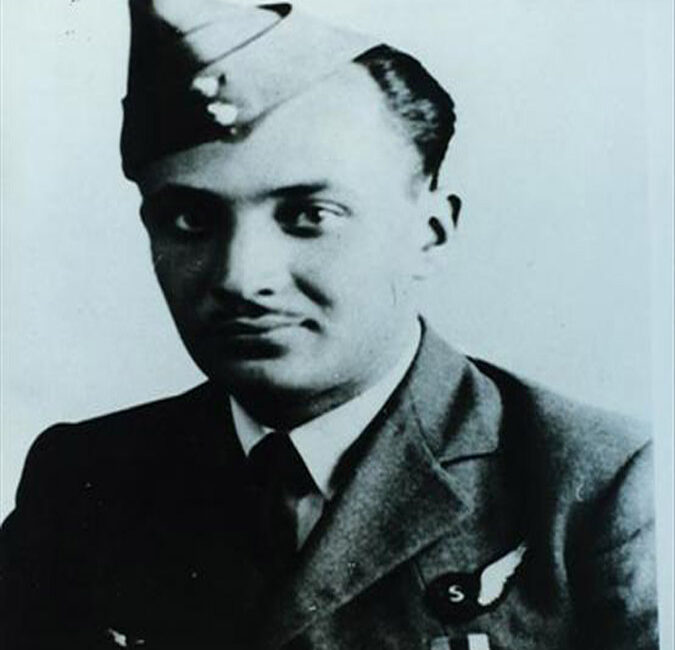
“I was serving in the Royal Air Force. When the British retreated from Greece, they left without taking me. Because of my uniform, I was placed with them instead of you.”
“But how could you, of all people, join the Royal Air Force? Don’t you know they call us Cypriots ‘Muleteers’?”
“I was a law student in London when the war broke out.”
“Now that makes sense…”
Before Glafkos could write again, Ali motioned for him to stop; an approaching German officer was nearby.
“Come to the fence tonight. We’ll talk,” whispered Vasiliadis. Glafkos nodded with a hopeful smile.
That night, he crept toward the barbed wire fence, hiding behind the bushes as the guards made their rounds. From the shadows, he saw two faint figures moving low to the ground. It was Ali and Vasiliadis. They reached the fence and lay flat. A faint whistle, Vasiliadis’s signal, cut through the still air. Glafkos crawled forward until he reached them.
“Are you sure you weren’t followed?” Ali asked.
“Positive,” whispered Glafkos.
Ali began searching the soil with his hands. Vasiliadis watched nervously while Glafkos looked on in confusion.
“Got it,” Ali murmured, brushing away the loose dirt to reveal a dark cloth. Beneath it lay a small tunnel leading to the other side.
“Now, take off your clothes,” said Ali.
“What?!”
“You heard me. You can’t come over wearing that uniform.”
Vasiliadis pulled out some rags from a bundle and passed them through the tunnel.
“Don’t worry, we won’t leave you naked. Put these on.”
Relieved, Glafkos quickly stripped down to his long white underwear and changed into the worn Muleteer uniform. The thought of being caught half-naked by German guards terrified him. Once dressed, he asked nervously, “So what now? How do I cross?”
“You won’t—at least not tonight,” replied Vasiliadis.
“Then why did you call me here?”
“Everything’s arranged. Tomorrow after roll call, we’ll have you moved to our side,” said Ali.
Still confused but trusting them, Glafkos returned silently to his barracks.
The next day, true to their word, Ali and Vasiliadis managed to bring Glafkos to the Turkish-Greek section of the camp. From that day on, the three became inseparable, working, eating, and sleeping side by side. Though Ali and Vasiliadis were uneducated villagers, the young law student and future politician Glafkos found a deep intellectual bond with them.
Their friendship soon spread. Ali and Vasiliadis introduced Glafkos to the others, both Turks and Greeks, who quickly grew to respect him. With his intelligence, knowledge, and natural leadership, Glafkos united the camp’s prisoners. He was elected as the camp’s representative, with a Turkish doctor as his deputy. Together, they fought for prisoners’ rights and earned privileges thought impossible, benefiting not only Turks and Greeks, but all prisoners except the Jews.
Years passed. The war ended. Survivors returned home. Among them was the young Glafkos, who followed his dreams and became first a successful lawyer, then a prominent politician. Eventually, he rose to lead his people. During his tenure, he never treated the Turkish Cypriots as enemies. He sought peaceful solutions to the island’s problems.
From 1993 to 2003, he served as the leader of the Greek Cypriot Administration. He was one of Rauf Denktaş’s closest friends, so close that they called each other “brother.”
For him, Cyprus was like that wartime barrack: a place where Turks and Greeks, two brothers of the same island, should live together in peace.