
 Nöbetçi Eczaneler



For many years, airports were perceived primarily as functional transit spaces, places where passengers were forced to wait before their flights. Security queues, long hours spent at boarding gates, and limited options for spending time turned the airport experience into a necessary but often unpleasant stopover for most travelers. Today, however, this perception is undergoing a fundamental shift. Modern airports are no longer merely transportation hubs; they are positioning themselves as destinations in their own right, places that offer experiences, create memories, and are even deliberately chosen by travelers.
At the heart of this transformation lies the “experience economy.” Today’s passengers seek more than a fast and seamless journey; they expect comfort, entertainment, culture, and meaning. Airport operators are turning these expectations into a strategic advantage, aiming to increase passenger satisfaction while growing non-aeronautical revenues. Immersive experiences are no longer an aesthetic choice; they have become a commercial and competitive necessity.
Experiences Enhanced by Technology
Digital technologies play a key role in redefining the airport experience. At Incheon International Airport in South Korea, VR lounges offer virtual tours and interactive games, encouraging passengers, especially younger travelers, to spend more time in the terminal. This extended dwell time often translates directly into increased retail and food-and-beverage spending.
Similarly, augmented reality, based digital wayfinding systems implemented at New York’s JFK Airport Terminal 4 help passengers navigate the terminal with less stress. Free movie theaters at Singapore Changi Airport and digital gaming zones at Dubai International Airport transform waiting time from a tedious obligation into an enjoyable part of the journey. Changi’s ChangiVerse project, launched in 2023, takes this approach even further by extending the airport experience into the digital realm, turning the airport into a destination beyond its physical boundaries.
Spaces That Appeal to Nature and the Senses
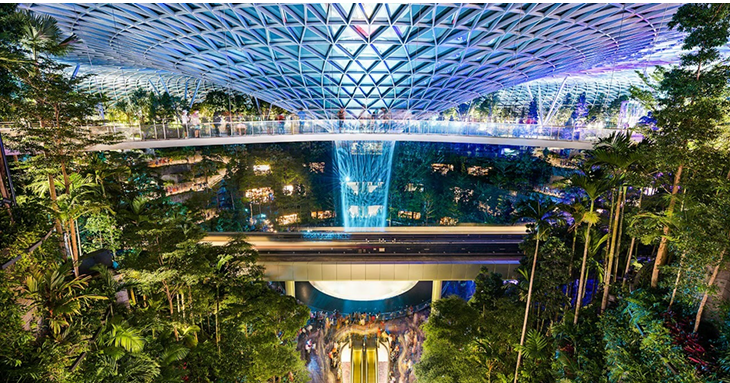
Immersive experiences are not limited to technology alone. Designing physical environments that appeal to the senses is becoming increasingly decisive in shaping passenger experience. One of the most striking examples is Singapore Changi Airport. The Butterfly Garden in Terminal 3 and the 40-meter indoor rain vortex at the Jewel complex offer passengers a nature-infused experience within the terminal itself. Following the opening of Jewel, Changi reported an approximately 15% increase in commercial revenues, clearly demonstrating the economic return of such investments.
This nature-integrated approach can be seen at other airports as well. Zurich Airport offers passengers the opportunity to rent bicycles and spend time around nearby lakes during layovers, while Munich Airport transforms its terminal into a festival-like space in winter with an ice-skating rink and a traditional Christmas market. Doha Hamad International Airport’s spa, swimming pool, and sleep pods, along with Hong Kong International Airport’s yoga rooms, redefine airports as places that generate well-being, not just movement.

Art, Culture, and Storytelling
Art and culture have become some of the most powerful tools for airports to establish a distinct identity. At Doha Hamad International Airport, works such as KAWS’s Small Lie, Urs Fischer’s iconic Lamp Bear installation, and Jean-Michel Othoniel’s sculptures turn the terminal into a contemporary art gallery. This approach has played a significant role in Hamad Airport being repeatedly named “World’s Best Airport.”
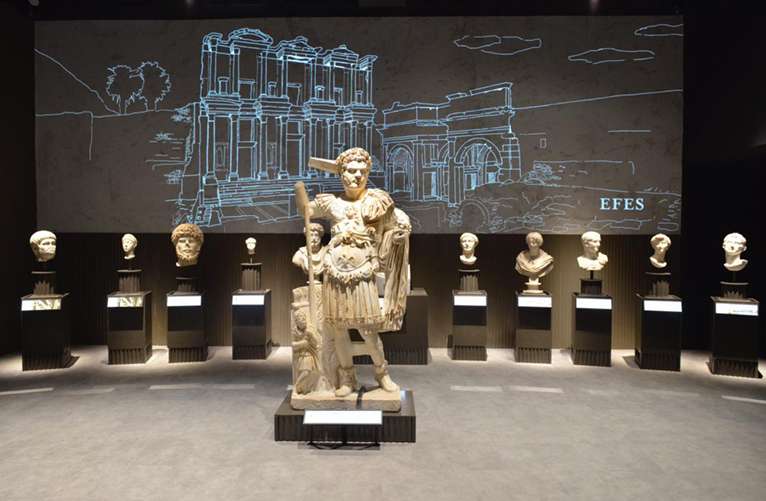
A similar cultural narrative can be found at Istanbul Airport, where an on-site museum brings Türkiye’s historical heritage to travelers, transforming the airport into a cultural venue. Amsterdam Schiphol Airport’s mini-museums, created in collaboration with the Rijksmuseum, and the permanent exhibition spaces at San Francisco International Airport, further demonstrate how widely this approach has been adopted globally.
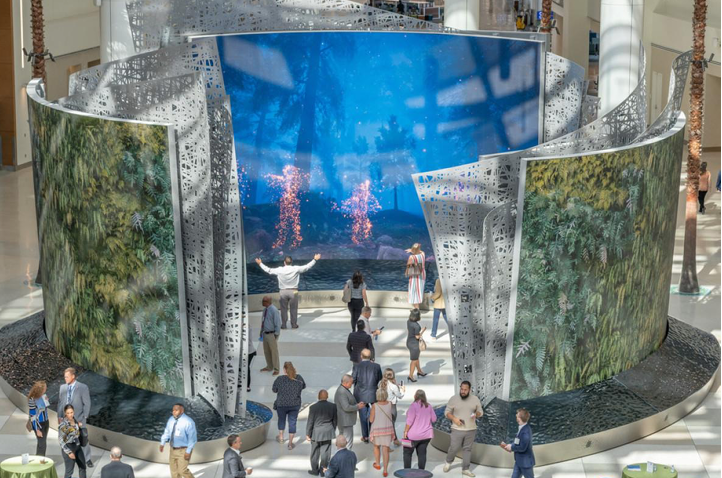
In North America, Orlando International Airport (MCO) stands out as a strong example of how immersive experiences can be integrated with storytelling and entertainment culture. Located in a city synonymous with Disney and theme parks, Orlando Airport, particularly its new Terminal C, uses digital art, lighting design, and large-scale media surfaces to begin the journey the moment passengers step into the airport.
The terminal is conceived as an extension of the Orlando experience itself. Passengers are no longer passive waiters but active participants in the story. Digital installations at Newark Liberty Airport Terminal A and massive media walls at the Tom Bradley International Terminal in Los Angeles present a new experiential language where art and digital technology converge, and storytelling is scaled to architectural dimensions.
The Economics of Experience and the Future
It is increasingly clear that immersive airport experiences are not only aesthetic but also deliver strong economic returns. According to data from Airports Council International (ACI), a 1% increase in passenger satisfaction globally leads to an average 1.5% growth in non-aeronautical revenues for airports. This clearly demonstrates that investments in passenger experience generate direct financial value.
Passengers spend more than three hours on average inside terminals, and every positive experience offered during this time increases the likelihood of spending. Through immersive experiences, dwell time is not only extended but it is also monetized. As a result, airports are no longer simply the places where flights begin; they have become an integral part of the journey itself.
By combining technology, nature, art, and storytelling, terminals evolve into showcases for their cities. Airports that invest in experience secure a lasting place in passengers’ minds while gaining a sustainable competitive advantage. As the value of time spent at airports becomes better understood, the travel experience itself grows richer, more meaningful, and more memorable than ever before.